Understanding Hardiness Zone Boundaries for Maine Gardens
A hardiness-zone boundary can make a Maine gardener wonder whether a plant will thrive on one side of a line but struggle just across it. The map is useful for comparing winter cold, but it cannot describe every yard or predict planting dates. Understanding what the boundary represents—and what it leaves out—helps you choose plants with better odds of surviving your site.
What a hardiness-zone boundary tells you
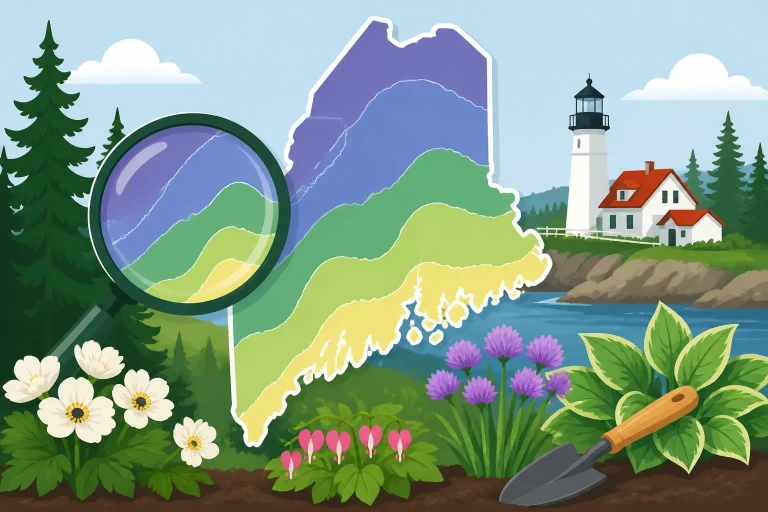
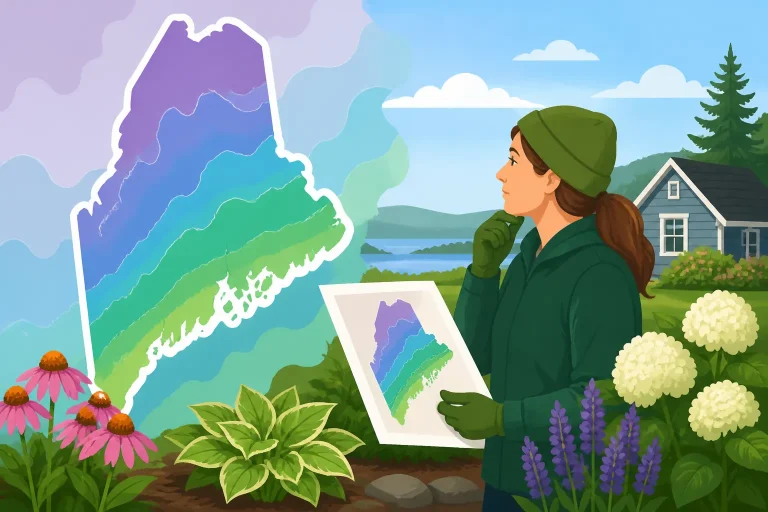
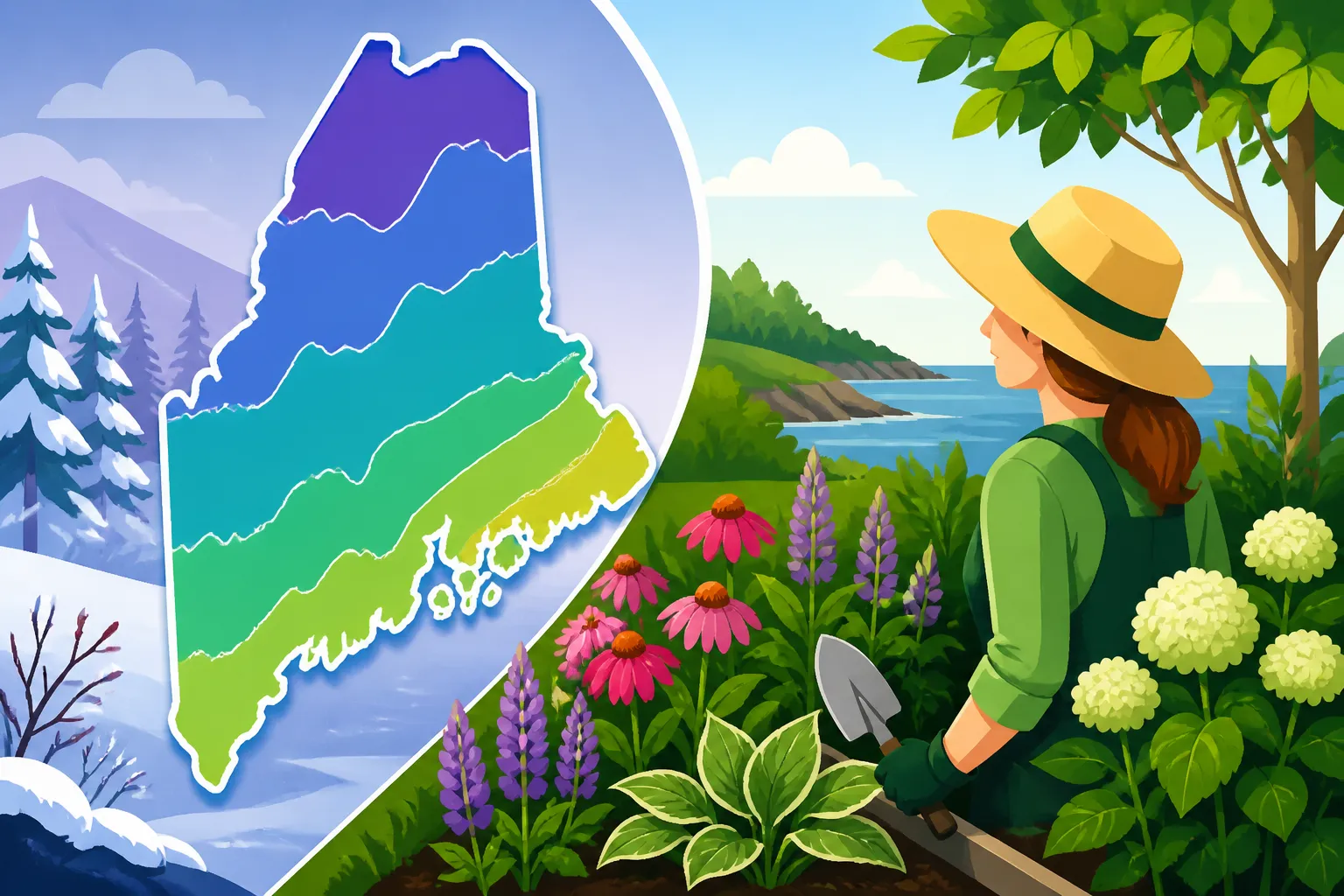
A hardiness zone is a way to compare the winter cold a place typically experiences with the cold a plant is expected to tolerate. The map groups places into bands, and the boundary between bands marks a change in that broad winter-temperature measure. It is a climate reference, not a physical barrier in the landscape.
That distinction matters in Maine. A line on a map may cross a town or pass near a property, but garden conditions do not change abruptly when you cross it. Winter temperatures, wind exposure, snow cover, soil drainage, slope, and nearby buildings all influence how plants fare. Two gardens in the same mapped zone can have noticeably different conditions. Two yards on opposite sides of a boundary may also be more alike than the map colors suggest.
A zone label is best treated as a starting point for a plant decision. It lets you compare the expected cold tolerance of a plant with the broad winter conditions associated with a place. It does not tell you whether a particular spot stays wet, catches cold winds, loses snow cover, or warms early in spring.
The boundary is also not a promise that a plant will survive every winter on one side and fail on the other. University of Maine Cooperative Extension describes the hardiness map as a guideline, not a guarantee. A plant’s survival depends on more than the map category, and local conditions can make a garden either more sheltered or more exposed than its zone label implies.
If you need help finding the zone associated with your area, start with Finding Your USDA Hardiness Zone in Maine and Reading the USDA Plant Hardiness Zone Map for Maine Yards. For a town-level check, Maine Planting Zones: How to Check Your Town by ZIP Code can help you understand what the map indicates for a broader location. A ZIP code or town result still cannot assign a zone to every planting spot within it.
The useful question is not simply, “Which side of the line am I on?” It is, “What does the zone tell me about winter cold, and what does my own yard add to that picture?”
Why a boundary cannot describe every Maine garden
A map must simplify a complicated landscape. Its bands are useful for comparing broad patterns, but the colors cannot show every slope, hollow, shoreline, forest edge, or sheltered corner. A boundary therefore describes a transition in mapped conditions rather than a sharp change in plant survival.
Small changes in landscape can matter
Cold air moves downhill and can collect in low spots. A garden on a slope may drain cold air differently from a planting area at the bottom. The direction and openness of a slope also affect sunlight and wind exposure. A sheltered yard near a building may experience different conditions from an exposed site nearby, even when both share the same map category.
Buildings, walls, fences, and dense plantings can reduce wind or create sheltered pockets. They can also change how quickly a spot warms and how moisture moves through the soil. These effects are local. A protected bed beside a structure does not necessarily make the entire property warmer, and a sheltered location can still have drawbacks such as poor air circulation or reflected heat.
Water and snow influence winter conditions as well. A spot that stays soggy can expose roots to conditions unlike those in well-drained soil. Snow may insulate plants where it remains, while exposed beds may receive little protection. Snow cover varies with wind, terrain, and the layout of the yard, so a map cannot tell you whether a particular plant will be buried or left exposed.
These differences are reasons to observe your garden, not reasons to dismiss the map. The map gives a broad frame of reference; the site determines how closely a specific planting place matches that frame.
A town-level result is not a yard-level reading
A town or ZIP-code lookup can be a helpful way to orient yourself, especially if you are new to gardening in the area. But it is not a measurement of the coldest corner, warmest wall, or wettest bed on your property. A single location label cannot represent every microclimate within a larger area.
If a result places your town close to a boundary, treat that as a cue to pay closer attention to the site and to the plant’s hardiness, not as proof that the plant will or will not survive. The map is not precise enough to settle a close call for an individual bed. When a plant is important to your design, gather more information about its cold tolerance and the conditions where you plan to put it.
A map lookup and a garden assessment answer different questions:
- The map helps you compare the broad winter climate of a location.
- A site assessment helps you understand exposure, drainage, shelter, and snow cover.
- A plant label or reliable plant description gives you a reference for the plant’s cold tolerance.
- Your planting plan combines those clues rather than relying on any one of them.
For a closer look at how a mapped line relates to nearby places, see Understanding Hardiness Zone Boundaries for Maine Gardens. If the area around your home has noticeably different terrain or exposure, Coastal vs Inland Microclimates in Maine Hardiness Zones offers a useful way to think about how local conditions shape a broad zone label.
How to assess the planting spot, not just the map
Before buying a plant that may be marginal for your location, look at the exact place where it would grow. A yard can contain several distinct planting environments. A sunny, sheltered bed near the house may behave differently from an open garden, a low corner, or a windy edge.
Notice exposure and shelter
Pay attention to where wind reaches the planting area and where it is blocked. A site open to prevailing winter winds may be more stressful for a plant than a sheltered spot. Wind can dry stems and foliage, move insulating snow, and expose plants to cold conditions. A nearby wall or hedge may reduce exposure, but it can also redirect wind or create shade. Consider the whole setting rather than assuming that any barrier is automatically helpful.
Sunlight matters because it influences how quickly a site warms and how plants enter and leave dormancy. A sunny spot can warm earlier than a shaded one, while a sheltered south-facing area may experience conditions different from a nearby open bed. Early warmth can be a mixed advantage: it may encourage growth, but it can also leave a plant vulnerable if cold returns. The hardiness zone does not describe those seasonal shifts.
Check drainage and soil moisture
Notice whether water stands after rain or snowmelt, whether the soil stays saturated, and whether the planting area dries quickly. Roots in poorly drained soil can face added stress, and a plant that is cold-hardy may still struggle in a wet location. Conversely, a very dry site may challenge plants that need more consistent moisture.
The aim is not to make a quick diagnosis from one observation. Look for recurring patterns through changing weather. If you are planning a bed, think about whether the soil and drainage suit the plant before treating winter hardiness as the only selection test. Assessing Sunlight, Slope, and Soil Moisture Before Planting in Maine can help organize these site checks.
Watch snow patterns
Notice where snow tends to accumulate and where it disappears or blows away. Snow can provide insulation for low-growing plants and roots, but it is not distributed evenly. An exposed bed may lose cover while a sheltered area holds it. A plant’s ability to tolerate cold in an exposed position may therefore differ from its performance under a dependable blanket of snow.
Snow cover should be treated as a helpful site feature, not a certainty. Wind and winter conditions can shift it, and a bed that is covered in one season may be exposed in another. For more on that protective role, see How Maine Winter Snow Cover Protects Herbaceous Perennials.
Keep observations local
If you already garden on the property, use what you have noticed over time. Record which areas lose snow first, where frost lingers, where water collects, and which plants show winter injury. These observations can help you place future plants more thoughtfully. They do not replace a plant’s hardiness information, but they add detail a map cannot provide.
For a new garden, begin by observing the site before committing to an expensive or difficult-to-replace plant. If you are planting several kinds of plants, make a simple site sketch and note the exposed, sheltered, sunny, shady, wet, and dry areas. This can prevent the common mistake of assigning one climate description to an entire yard.
| Site clue | What to observe | Why it matters to a plant choice |
|---|---|---|
| Wind exposure | Whether the spot is open or sheltered | Exposed locations can be more stressful than protected ones |
| Slope and elevation | Whether the area is high, sloped, or low | Cold air and water may collect differently across the yard |
| Drainage | Whether soil stays wet or dries readily | Roots may struggle when moisture conditions do not suit the plant |
| Snow cover | Where snow stays, drifts, or disappears | Winter insulation may differ from one bed to another |
| Sun and shade | How much direct light the spot receives | Light affects growth and how the planting area warms |
| Nearby structures | Whether walls or buildings shelter or reflect heat | Built features can alter local exposure and warmth |
The table is a way to organize observations, not a substitute for plant-specific information. A plant’s needs still have to match the site.
Choosing plants when your location is near a boundary
When a plant’s listed hardiness is close to the zone indicated for your area, treat the choice as a risk decision. The map cannot guarantee that a borderline plant will survive, and a favorable microclimate cannot make every plant suitable. Consider how important the plant is to your garden, whether you can provide a suitable location, and how much loss you are willing to accept.
For greater certainty when trying a new plant, University of Maine Cooperative Extension advises choosing a species rated one-half or even one full zone colder than the site is rated. That is a conservative selection approach, especially when a plant is new to your garden or will be placed in an exposed area. It can improve the odds of winter survival, but it does not remove other risks such as poor drainage, unsuitable light, or inadequate growing conditions.
Read plant information as a range of risk
When comparing plants, look for the cold-tolerance information provided by a reliable nursery, reference, or plant label. Be cautious about treating a label as a guarantee. A plant description gives a useful indication, but it may not account for the precise conditions of your yard, the plant’s establishment, or unusual weather.
A plant rated for colder conditions than your site may be a lower-risk choice, but “hardy enough” is not the same as “will thrive anywhere.” A plant may survive winter and still grow poorly if it is planted in unsuitable soil, light, or moisture. Conversely, a plant near the edge of its tolerance may do better in a protected, well-matched location than in an open, exposed one.
If you want a dependable garden, favor plants with a comfortable margin rather than building the whole design around borderline choices. If you are curious about a plant with less margin, try it in a favorable spot and be prepared for uneven results. This makes experimentation more manageable without relying on a map boundary as a yes-or-no verdict.
For more help weighing plant descriptions, see How to Evaluate Winter Hardiness Before Buying Perennials and Will That Plant Survive Winter in Your Maine Garden?. These topics are especially relevant when a plant is costly, difficult to replace, or central to the design.
Match the plant to the role it will play
The consequences of a failed plant vary. A small trial planting may be a reasonable experiment, while a foundation planting or an important screen may call for a more conservative choice. Think about replacement effort, the time needed for a plant to fill its intended role, and whether winter damage would leave a noticeable gap.
Consider several questions before you buy:
- Is the plant’s cold tolerance comfortably suited to the location, or is it near the limit?
- Is the proposed site sheltered, exposed, wet, dry, or prone to losing snow cover?
- Does the plant also need particular light or soil conditions?
- Would winter damage be acceptable, or is reliable survival important?
- Is there a more cold-tolerant plant with a similar size, form, or garden function?
These questions help separate a plant’s hardiness rating from its suitability for your garden. They also help you decide when a trial is worth the uncertainty.
Do not rely on a warm corner to overcome every mismatch
A protected microclimate may improve a plant’s chances, but it is not a universal fix. A warm wall can change exposure, yet it does not correct unsuitable drainage or guarantee snow protection. A sheltered spot may help evergreen foliage but still be too shaded for a sun-loving plant. Think of local shelter as one factor in the decision, not a substitute for matching the plant to its full set of needs.
If the plant is only marginally suited to your broad location and the site is also exposed, consider choosing a hardier alternative or planting in a more protected area. If you decide to try it, understand that the outcome may vary. That is a reasonable garden experiment, as long as the choice is made with realistic expectations.
Hardiness zones are not planting calendars
A hardiness zone is about winter cold tolerance. It does not tell you when soil is workable, when to sow seeds, when to set out transplants, or when a crop will mature. Those decisions involve seasonal timing and local conditions that a hardiness map does not represent.
This distinction is easy to miss because both planting calendars and hardiness maps are used to make garden decisions. But they answer different questions. A zone comparison can help you judge whether a perennial or shrub is likely to tolerate winter. It cannot tell you whether a warm-season vegetable has enough time to mature, whether a seedbed is ready, or whether a spring cold spell has passed.
For vegetables and annual flowers, planting decisions often depend on soil warmth, crop requirements, frost risk, and the time needed for growth. For trees and shrubs, the season and condition of the soil can also affect establishment. None of those details can be read from a zone boundary alone.
Use a planting calendar or crop-specific guidance for timing, and use the hardiness map as one part of perennial and woody-plant selection. For a deeper explanation of the distinction, see Why Your Hardiness Zone Does Not Tell You When to Plant Seeds. If your question is about planting dates, When Is It Safe to Plant Outdoors in Maine? and Maine Vegetable Planting Schedule for Spring Through Fall address a different problem from winter hardiness.
Keep these questions separate:
- “Can this perennial tolerate the winter conditions associated with my location?” is a hardiness question.
- “When should I plant it?” is a timing question.
- “Will it grow well in this bed?” is a site and care question.
- “Will this vegetable mature before cold weather?” is a crop and season-length question.
A good plan uses the right kind of information for each decision. A zone label cannot replace a frost-date guide, a planting schedule, or an assessment of soil and light. Likewise, a planting calendar does not tell you whether a perennial is likely to tolerate winter in an exposed yard.
A practical way to use a boundary when planning
Treat a boundary as a prompt to check details, not a reason to abandon a plant or buy it automatically. The map can help you narrow choices, while plant information and site observations help you decide what belongs in a particular bed.
A useful process is:
- Find the zone information associated with your town or area, and remember that it describes a broad location rather than every part of your yard.
- Check the plant’s stated winter hardiness and note whether it has a comfortable margin for the mapped site.
- Evaluate the exact planting spot for wind, slope, shelter, drainage, snow cover, sunlight, and soil conditions.
- Decide how much risk is acceptable based on the plant’s cost, role, and importance to the design.
- Choose a more cold-tolerant option when dependable survival matters, or try a borderline plant in a favorable spot when you are comfortable with uncertainty.
- Use a planting calendar and crop-specific guidance for timing decisions that the hardiness map cannot answer.
This process is deliberately cautious because no map can predict the outcome for an individual plant. It is also flexible: a gardener can choose a reliable plant for a key spot and reserve a sheltered corner for experimentation.
Common boundary mistakes to avoid
Treating the line as a fence. A boundary does not mean that plants stop surviving on one side and become safe on the other. It represents a transition in mapped winter conditions. Local exposure and plant traits still matter.
Assuming every part of a town shares identical conditions. A town result offers context, not a yard-specific reading. Terrain, water, buildings, and vegetation can create meaningful differences within a local area.
Using the warmest part of the yard as the only test. A sheltered location may help, but the plant still has to suit the soil, light, drainage, and moisture. The warmest corner is not always the best planting site.
Confusing survival with performance. A plant that makes it through winter may still be damaged, slow to recover, or poorly suited to its growing conditions. Winter survival is one part of success, not the whole definition.
Treating a label as an absolute promise. Plant descriptions are useful for comparison, but site conditions and weather vary. A rating should guide a decision rather than end the discussion.
Using hardiness zones to plan seed sowing. A zone does not say when the soil is ready or how much time a crop needs. Use planting advice designed for the crop and season.
Ignoring the cost of failure. Trying an uncertain plant can be worthwhile, but the decision should fit the stakes. A small trial is different from relying on one marginal plant to serve as a long-term screen or focal point.
Revisit choices as the garden teaches you
A garden provides information over time. Notice which plants come through winter without trouble, which show repeated injury, and which locations seem to hold snow or dry out quickly. Use those patterns to refine future choices. One season does not define every plant’s long-term prospects, but repeated observations can reveal how a site behaves.
If a plant struggles, look beyond the zone label before deciding why. Cold injury is one possibility, but drainage, summer stress, light, disease, and planting conditions may also contribute. A plant that fails in one spot may perform better elsewhere, while a plant that appears to tolerate a boundary location may still need protection or a better-matched site.
Keep a record of the plant, its location, and the conditions you observed. Over time, that record can help you distinguish a generally challenging plant from one that was simply placed in the wrong part of the yard. It can also help you identify sheltered areas where more experimental choices are reasonable.
The goal is not to make every garden decision certain. It is to use the zone map for the question it answers, then combine it with the plant’s needs and the site’s actual conditions. That is a more reliable way to work with boundary uncertainty than treating a colored line as a verdict.
Frequently Asked Questions
Does a hardiness-zone boundary mean plants cannot grow on the colder side?
No. The boundary is a broad guide to winter cold, not a fence around where a plant can grow. A plant may survive in a favorable microclimate, while a plant suited to the mapped area may struggle in an exposed or poorly drained site.
Should I use a town or ZIP-code result for my whole yard?
Use it as a starting point. It gives broad location context, but it cannot describe every bed, slope, or sheltered corner on a property. Check the specific planting spot before making a close-call plant choice.
What should I do if my location is near a boundary?
Compare the plant’s hardiness with the mapped information, then assess exposure, drainage, snow cover, and shelter. If dependable survival matters, choose a plant with more cold tolerance than the site requires; if you are willing to experiment, try a borderline plant in a favorable location.
Does my hardiness zone tell me when to plant vegetables?
No. A hardiness zone describes winter cold tolerance, not seed-sowing or transplanting dates. Use crop-specific planting guidance and local timing information for vegetables.
Sources
- University of Maine Cooperative Extension — USDA Plant Hardiness Zone Map – Cooperative Extension: Garden and Yard – University of Maine Cooperative Extension (checked November 15, 2026)
Disclaimer
This article is for general informational purposes only and does not constitute professional advice. Laws, prices and regulations vary by location and change over time. Consult a qualified professional for guidance on your specific situation. Maine Gardening Guide is not a government agency and is not affiliated with any university extension, state department of agriculture or other government agency.